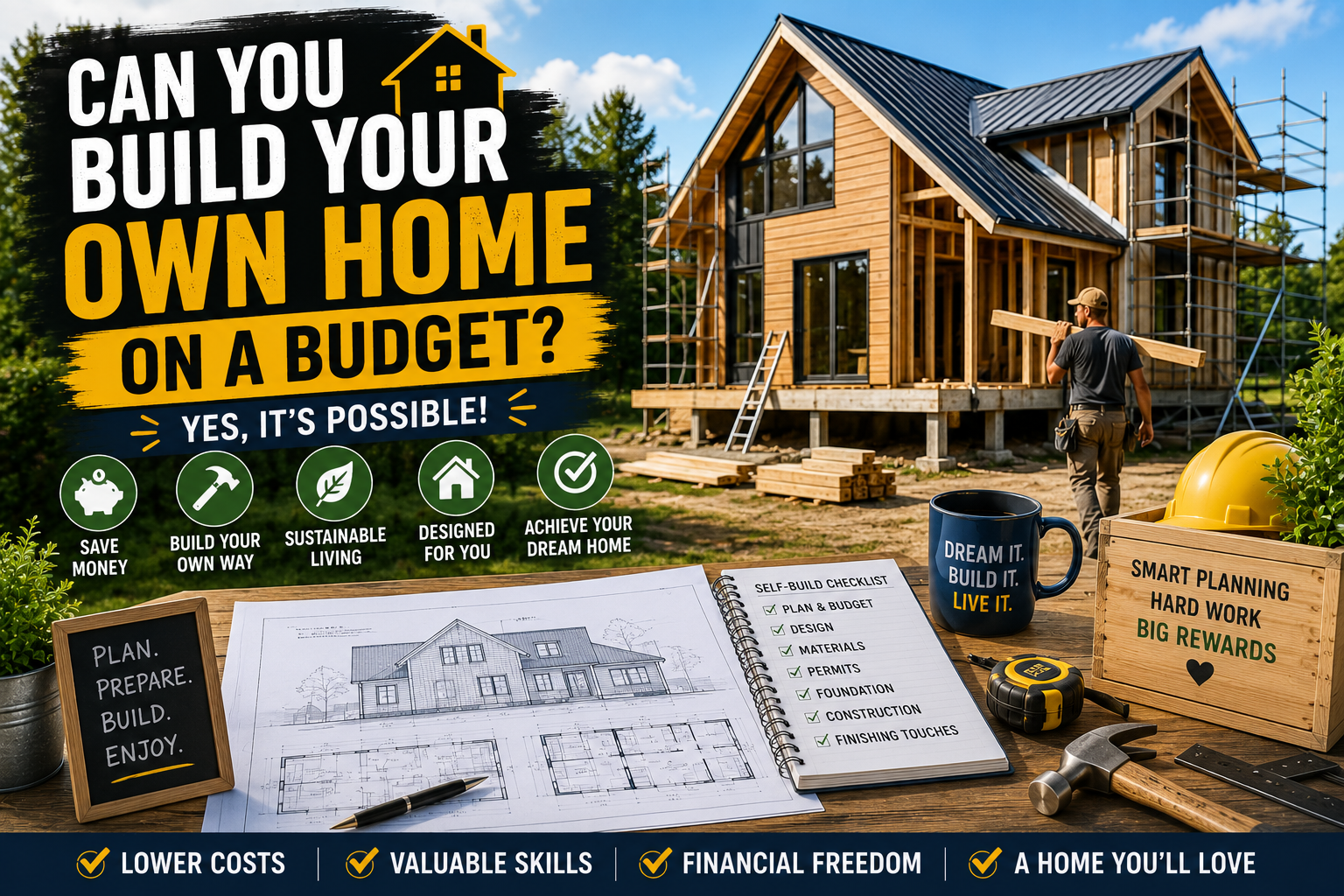
For many people, owning a home feels increasingly out of reach as property prices and construction costs continue to rise. At the same time, the popularity of self-build projects, tiny homes and sustainable living has inspired thousands of people to ask an important question:
Can you really build your own home on a tight budget?
The short answer is yes—but it requires careful planning, realistic expectations and a willingness to learn. While building your own house isn’t an easy undertaking, many DIY enthusiasts have successfully created affordable homes by taking on much of the work themselves and making smart decisions about design, materials and construction methods.
In this guide, we’ll explore what it takes to build your own home, where you can save money, and the challenges you’ll need to consider before starting your own self-build journey.
Is It Really Possible to Build Your Own Home?
Building your own home is certainly possible, and every year people around the world complete successful self-build projects ranging from tiny houses and cabins to full-sized family homes.
Modern technology has made DIY home building more accessible than ever. Online building guides, detailed construction plans, video tutorials and specialist communities provide an enormous amount of information that simply wasn’t available a generation ago.
However, “possible” doesn’t necessarily mean “easy.” A successful self-build requires research, patience and a willingness to solve problems as they arise.
Why More People Are Choosing DIY Home Building
Lower Construction Costs
Perhaps the biggest attraction is the potential to reduce labour costs.
Professional builders account for a significant portion of a home’s construction budget. By completing suitable tasks yourself—such as painting, insulation, flooring, landscaping or interior finishing—you may significantly reduce the overall cost of the project.
Of course, highly specialised work such as electrical installations, gas systems and certain structural tasks may still need licensed professionals, depending on local laws and regulations.
Greater Control Over Your Budget
When you build your own home, you decide where to spend your money.
You may choose:
- Simpler architectural designs
- Standard-sized windows and doors
- Cost-effective roofing materials
- Energy-efficient insulation
- Reclaimed or recycled building materials
- Gradual interior upgrades over time
This flexibility allows you to prioritise the features that matter most while postponing non-essential luxuries until your budget allows.
A Home Designed Around Your Lifestyle
Building your own house also means you’re not limited to existing floor plans.
You can create a layout that suits your needs, whether that’s:
- Open-plan living
- A dedicated home office
- A workshop or hobby room
- A large kitchen
- Accessible living spaces
- Energy-efficient design
- Future expansion possibilities
Designing your home from the ground up can make it both more practical and more enjoyable to live in.
How to Save Money When Building Your Own Home
Keep the Design Simple
Complex rooflines, unusual shapes and elaborate architectural features all increase construction costs.
A straightforward rectangular design with a simple roof is generally much quicker and cheaper to build while still providing an attractive, comfortable home.
Build Only the Space You Need
It’s easy to overestimate how much space you’ll actually use.
A smaller, well-designed home can often feel more comfortable than a much larger house filled with unused rooms.
Many self-builders deliberately start with a modest design and plan future extensions if needed.
Use Standard Materials
Custom-made components often come with premium prices.
Choosing standard timber sizes, common roofing materials and readily available fixtures usually keeps costs under control and simplifies repairs in the future.
Buy Materials Carefully
Building materials can represent one of the largest expenses.
Many DIY builders save money by:
- Comparing suppliers
- Buying during seasonal sales
- Purchasing surplus materials
- Using reclaimed timber where appropriate
- Looking for discounted ex-display items
- Planning purchases carefully to minimise waste
Good planning can save far more than simply chasing the lowest prices.
Skills You’ll Need
You don’t need to be a master builder to begin planning your own home, but developing practical skills will make the process much smoother.
Useful skills include:
- Measuring and setting out
- Basic carpentry
- Safe use of power tools
- Reading building plans
- Problem-solving
- Project management
- Budget planning
Fortunately, many of these skills can be learned through smaller DIY projects before tackling a full house build.
Don’t Forget Planning Permission and Building Regulations
One of the most important parts of any self-build project is understanding the legal requirements in your area.
These may include:
- Planning permission
- Building permits
- Building inspections
- Structural engineering requirements
- Electrical and plumbing regulations
- Energy-efficiency standards
- Fire safety rules
The exact requirements vary by country, region and local authority, so always research the regulations that apply where you intend to build.
Tiny Homes and Small Houses: A Budget-Friendly Alternative
Many people who dream of self-building choose a smaller home rather than a traditional house.
Tiny homes and compact cottages often offer:
- Lower material costs
- Faster construction
- Lower heating bills
- Easier maintenance
- Reduced environmental impact
- Greater affordability
A thoughtfully designed small home can provide everything many households need while remaining much more achievable on a limited budget.
Can You Do All the Work Yourself?
In theory, some highly skilled builders complete almost every stage themselves.
In practice, most DIY home builders combine their own labour with professional assistance where necessary.
This approach often offers the best balance between saving money and ensuring that critical work meets safety and legal standards.
Knowing when to call in an expert is just as important as knowing what you can confidently do yourself.
Helpful Resources for DIY Home Builders
Today’s self-builders have access to more learning resources than ever before.
These include:
- Building guides
- Construction books
- Video tutorials
- Self-build communities
- Home design software
- Architectural services
- Detailed building plans
- Specialist DIY courses
Learning continuously throughout the project is one of the keys to success.
Challenges to Expect
Building your own home can be incredibly rewarding, but it’s important to be realistic about the challenges.
Common obstacles include:
- Budget overruns
- Delays caused by weather
- Material shortages
- Unexpected site conditions
- Planning approval timelines
- Physical demands
- Decision fatigue
Building extra time and a contingency fund into your plans can help you manage these setbacks without losing momentum.
Is DIY Home Building Worth It?
For many people, the answer is yes.
Beyond the potential financial savings, building your own home offers a unique sense of achievement. Every wall raised, every room completed and every challenge overcome contributes to creating a home that reflects your own effort, creativity and vision.
It’s rarely the fastest route to home ownership, and it isn’t the right choice for everyone. However, if you’re willing to plan carefully, develop practical skills and approach the project with patience, a self-build can be both achievable and deeply rewarding.
Final Thoughts
Building your own home on a tight budget is no longer just an ambitious dream. Thanks to modern construction resources, detailed building plans and a wealth of online learning materials, more people than ever are exploring self-build projects as an alternative to buying an existing property.
Success depends on setting realistic expectations, creating a detailed budget, understanding local regulations and taking the time to learn the skills needed for the job. You don’t have to do everything yourself, but every task you can safely and legally complete may help reduce costs while giving you valuable experience.
Whether you’re considering a tiny home, a compact family house or a countryside retreat, careful planning and steady progress can bring your goal much closer. With determination, smart budgeting and the right guidance, building your own home can be one of the most rewarding DIY projects you’ll ever undertake.
Leave a Reply
You must be logged in to post a comment.