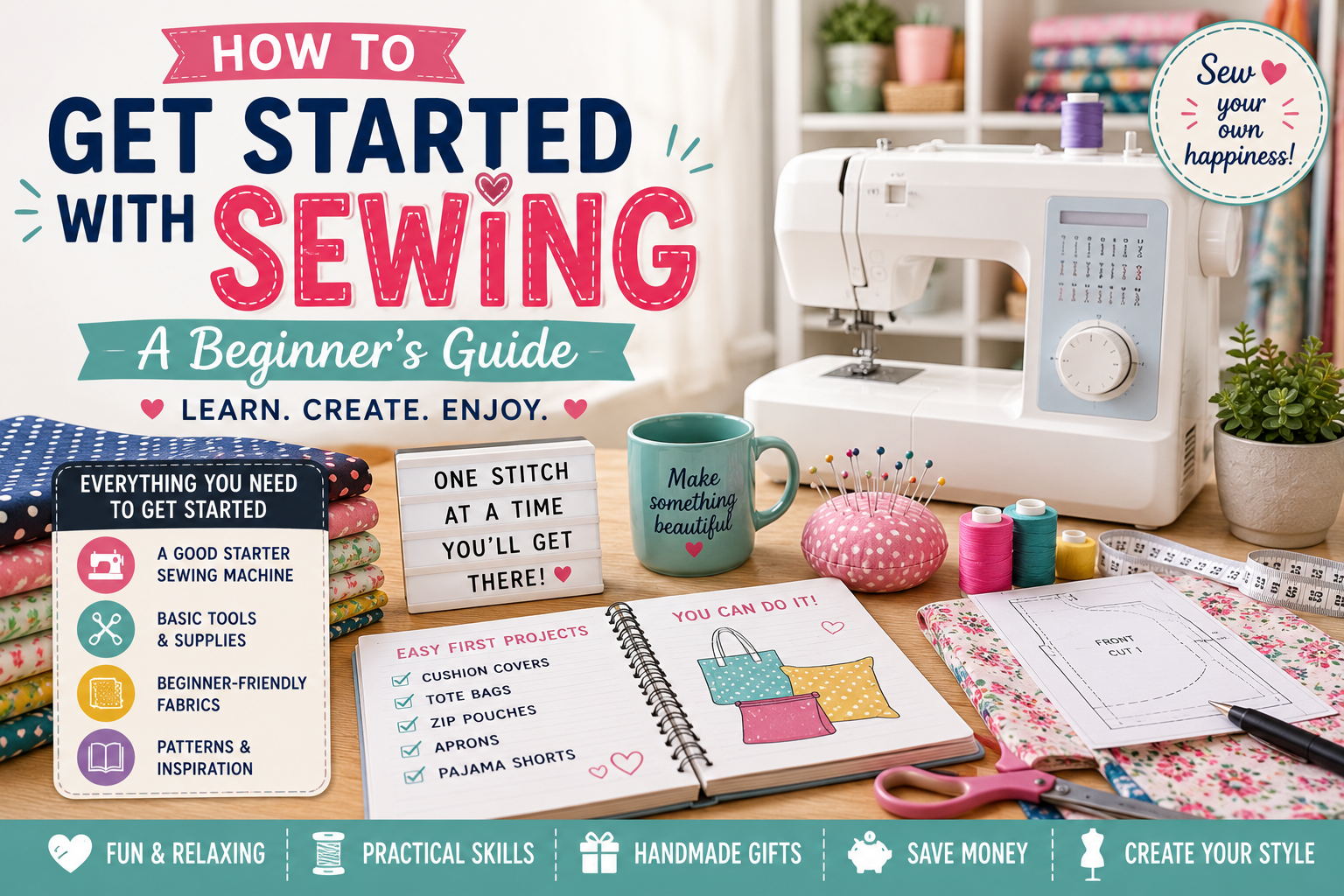
Sewing is one of the most rewarding hobbies you can learn. Whether you want to create your own clothes, make handmade gifts, repair household items or simply enjoy a relaxing creative pastime, sewing offers endless opportunities to develop practical skills while expressing your creativity.
The great news is that getting started with a sewing hobby is much easier than many beginners imagine. Modern sewing machines are more user-friendly than ever, online tutorials are widely available, and there are countless beginner-friendly projects that can help you build confidence one stitch at a time.
If you’ve been wondering how to start sewing at home, this guide will walk you through everything you need to know.
Why Choose Sewing as a Hobby?
Sewing is much more than simply making clothes.
It combines creativity with practical problem-solving, allowing you to create useful items that can be enjoyed for years. Every project teaches new skills, and many people find sewing to be both relaxing and deeply satisfying.
Some of the benefits include:
- Learning a valuable life skill
- Creating personalised clothing
- Making home décor and accessories
- Repairing and altering garments
- Saving money on simple sewing jobs
- Giving thoughtful handmade gifts
- Enjoying a mindful, creative activity
Unlike many hobbies, sewing produces something tangible that you can use every day.
Do You Need a Sewing Machine?
Not necessarily.
Many people begin by learning basic hand-sewing techniques before investing in a machine.
However, if you think you’ll enjoy making larger projects such as clothing, cushions or curtains, a beginner-friendly sewing machine can make the process much quicker and easier.
When choosing your first machine, look for features such as:
- Straight stitch
- Zigzag stitch
- Adjustable stitch length
- Reverse stitching
- Automatic buttonhole function
- Easy threading system
There’s no need to buy the most expensive model. Many affordable machines provide everything beginners need.
Essential Sewing Supplies
Fortunately, you don’t need a huge collection of tools to begin your sewing journey.
A basic sewing kit should include:
Fabric Scissors
Invest in a good pair of fabric scissors and reserve them exclusively for cutting fabric.
Measuring Tape
Accurate measurements are essential for successful sewing projects.
Pins and Pin Cushion
Pins help hold fabric pieces together before stitching.
Sewing Needles
Keep a variety of hand-sewing needles available for different fabrics.
Thread
Start with a few neutral colours such as black, white and grey before expanding your collection.
Seam Ripper
Every sewer makes mistakes.
A seam ripper quickly removes unwanted stitches without damaging the fabric.
Fabric Marker or Chalk
Useful for transferring markings from sewing patterns onto fabric.
Choosing Your First Fabric
One of the biggest beginner mistakes is selecting difficult fabrics.
For your first few projects, choose stable woven fabrics such as:
- Cotton
- Cotton blends
- Linen blends
- Canvas
- Calico
These materials are easier to cut, pin and sew than stretchy or slippery fabrics like silk, satin or jersey.
As your skills improve, you can gradually experiment with more advanced materials.
Learn the Basics Before Starting Big Projects
It can be tempting to begin with a complicated dress or tailored jacket.
Instead, spend some time learning basic techniques such as:
- Threading your sewing machine
- Winding a bobbin
- Sewing straight lines
- Backstitching
- Sewing corners
- Pressing seams
- Finishing raw edges
Mastering these simple skills first will make larger projects far less intimidating.
Easy Sewing Projects for Beginners
One of the best ways to improve is by completing small, achievable projects.
Good beginner projects include:
Cushion Covers
A simple square cushion introduces straight seams and basic construction.
Tote Bags
Reusable shopping bags teach cutting, assembly and handle construction.
Zip Pouches
A great way to learn how zips are installed.
Aprons
Practical, forgiving projects that introduce shaping and finishing techniques.
Table Runners
Perfect for practising accurate cutting and long straight seams.
Simple Pyjama Shorts
An excellent first clothing project once you’ve gained some confidence.
Each completed project builds both your skills and your confidence.
Understanding Sewing Patterns
Many beginners feel intimidated by sewing patterns, but they’re simply a set of instructions that explain how to cut and assemble fabric pieces.
A typical pattern includes:
- Pattern pieces
- Cutting layouts
- Fabric requirements
- Size guides
- Step-by-step instructions
- Construction diagrams
Start with patterns labelled “Easy” or “Beginner” to avoid unnecessary frustration.
Create a Comfortable Sewing Space
You don’t need a dedicated craft room to enjoy sewing.
Many people successfully sew from:
- Kitchen tables
- Spare bedrooms
- Home offices
- Dining rooms
- Small craft corners
Try to organise your supplies so they’re easy to access, and make sure you have good lighting to reduce eye strain.
A tidy workspace also makes sewing more enjoyable.
Learn from Online Resources
One of the biggest advantages beginners have today is access to thousands of free learning resources.
You can find:
- Step-by-step video tutorials
- Beginner sewing blogs
- Printable sewing patterns
- Online sewing communities
- Digital sewing courses
- Project inspiration on social media
Watching experienced sewists demonstrate techniques often makes learning much easier than relying solely on written instructions.
Common Beginner Mistakes to Avoid
Every new hobby comes with a learning curve.
Some common sewing mistakes include:
- Skipping the ironing
- Using blunt needles
- Cutting fabric inaccurately
- Forgetting seam allowances
- Pulling fabric through the machine
- Choosing difficult fabrics too soon
- Rushing projects
Remember that mistakes are part of learning. Even experienced sewists occasionally unpick seams and start sections again.
Can Sewing Save You Money?
Many people begin sewing to reduce clothing costs.
While sewing isn’t always cheaper than buying mass-produced garments, it can save money by:
- Repairing damaged clothing
- Altering garments for a better fit
- Making home furnishings
- Reusing fabric
- Creating reusable shopping bags
- Extending the life of favourite clothes
Many hobbyists also enjoy making personalised gifts that are both thoughtful and practical.
Why Sewing Is Such a Rewarding Hobby
Sewing combines creativity, craftsmanship and practical skills in a way that few hobbies can match.
Every finished project represents something you’ve designed, assembled and completed yourself. Over time you’ll develop greater confidence, improve your technical abilities and build a collection of handmade items that reflect your own style.
Whether you’re interested in fashion, quilting, home décor or simple everyday repairs, sewing offers endless opportunities to keep learning and creating.
Final Thoughts
Starting a sewing hobby doesn’t require expensive equipment or years of experience. With a few essential tools, a beginner-friendly sewing machine, some easy fabrics and a willingness to learn, almost anyone can enjoy sewing at home.
The key is to start small, practise regularly and enjoy the learning process. Each project teaches something new, and before long you’ll be confidently reading sewing patterns, experimenting with different fabrics and creating handmade items you can truly be proud of.
Whether your goal is to make your own clothes, personalise your home, or simply enjoy a relaxing creative pastime, sewing is a hobby that can provide years of enjoyment while developing skills you’ll use for a lifetime.
Leave a Reply
You must be logged in to post a comment.