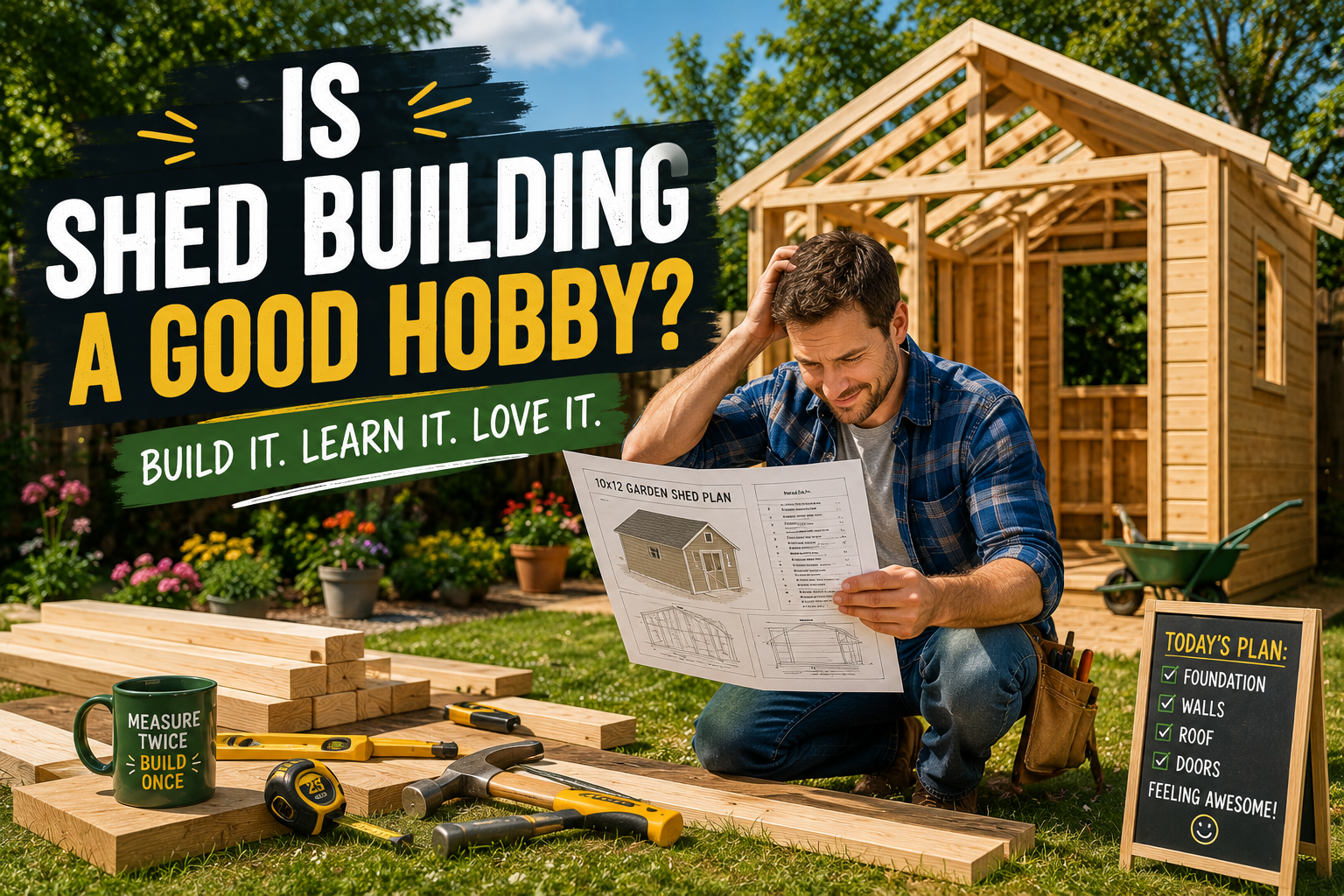
If you enjoy DIY projects, working with your hands and creating something practical from scratch, you may have asked yourself: Is shed building a good hobby?
The answer is a definite yes. Shed building combines woodworking, construction, planning and creativity into one rewarding pastime. Whether you’re looking to add valuable storage to your garden, create your own workshop or simply enjoy tackling larger DIY projects, building sheds can be an incredibly satisfying hobby.
In this guide, we’ll explore what shed building involves, why it’s becoming increasingly popular, the skills you’ll develop and how you can get started on your first project.
What is Shed Building?
Shed building is the process of designing and constructing outdoor buildings using timber and other construction materials.
Although most people think of a simple garden shed, the hobby can include a wide range of projects, including:
- Garden storage sheds
- Tool sheds
- Potting sheds
- Workshop sheds
- Bike storage
- Garden offices
- Summer houses
- Children’s playhouses
- Small cabins
- Log stores
Some hobbyists even customise their builds with electricity, insulation, shelving, windows and decorative finishes, turning a simple shed into an impressive outdoor space.
Why Shed Building Makes a Great Hobby
You Create Something Useful
Unlike many hobbies that produce temporary results, shed building leaves you with something that adds genuine value to your home.
A well-built shed can provide:
- Extra storage
- A dedicated workshop
- Garden equipment storage
- A home office
- A hobby room
- A relaxing retreat
Every completed project becomes something you’ll use and appreciate for years.
It’s a Fantastic Creative Outlet
Although sheds follow practical designs, there’s still plenty of room for creativity.
You can customise almost every aspect of your build, including:
- Size
- Roof style
- Cladding
- Windows
- Doors
- Interior layout
- Shelving
- Paint colours
- Decorative trim
No two shed projects have to look the same.
You’ll Learn Valuable DIY Skills
Building sheds teaches a wide variety of practical skills that can be applied to many other home improvement projects.
Along the way you’ll learn:
- Measuring accurately
- Reading construction plans
- Timber framing
- Roofing techniques
- Installing doors and windows
- Basic joinery
- Using power tools safely
- Planning larger projects
- Solving construction challenges
These are valuable skills whether you’re building future sheds, improving your home or taking on other woodworking projects.
What Tools Do You Need?
One of the advantages of shed building is that you don’t need professional construction equipment to get started.
Many beginners build their first shed using standard DIY tools.
Essential equipment includes:
- Tape measure
- Spirit level
- Combination square
- Circular saw or mitre saw
- Cordless drill and driver
- Hammer
- Clamps
- Utility knife
- Ladder
- Safety glasses
- Ear protection
- Work gloves
As your hobby develops, you may invest in more advanced tools to improve speed and accuracy, but it’s perfectly possible to complete many projects with a basic toolkit.
Choosing the Right Materials
Most sheds are constructed using timber because it’s versatile, strong and relatively easy to work with.
Common materials include:
Pressure-Treated Timber
Ideal for framing because it resists moisture and rot.
Cedar
Naturally durable and attractive, making it a popular choice for premium sheds.
Plywood and OSB
Frequently used for flooring, roofing and wall sheathing.
Exterior Cladding
Timber cladding gives your shed both protection and visual appeal.
Selecting quality materials is one of the biggest factors in creating a shed that lasts for many years.
Start with Simple Shed Projects
You don’t need to begin by building a large workshop.
Many hobbyists start with smaller outdoor projects before progressing to larger structures.
Beginner-friendly ideas include:
- Log stores
- Bin storage units
- Garden storage boxes
- Small tool sheds
- Bike shelters
- Potting benches
- Lean-to storage sheds
These projects help you develop confidence while introducing essential construction techniques.
Why Good Shed Plans Matter
One of the biggest differences between a successful build and a frustrating experience is having detailed plans.
Well-designed shed plans typically include:
- Accurate measurements
- Materials lists
- Cutting diagrams
- Step-by-step instructions
- Roofing details
- Door and window layouts
- Foundation guidance
Following clear plans allows beginners to focus on building rather than constantly trying to work out the next step.
Safety Should Always Come First
Because shed building involves larger materials and power tools, safe working practices are essential.
Always remember to:
- Wear eye protection
- Use hearing protection when operating power tools
- Lift heavy timber safely
- Work on stable ground
- Check measurements before cutting
- Keep your workspace tidy
- Follow manufacturer guidance for all tools
Taking your time often results in a better-quality build as well as a safer working environment.
Can Shed Building Save Money?
Building your own shed is often more affordable than buying a high-quality pre-built model.
When you build it yourself, you can:
- Choose better materials
- Customise the design
- Build exactly the size you need
- Upgrade features over time
- Avoid paying for labour
While tools and materials represent an initial investment, many DIY builders enjoy the long-term value and satisfaction of creating something themselves.
Can Shed Building Become a Side Business?
Many people begin building sheds simply because they enjoy the process.
Over time, however, some hobbyists go on to build:
- Garden sheds
- Storage buildings
- Workshops
- Summer houses
- Log stores
- Animal shelters
for family, friends or paying customers.
The skills developed through the hobby can even open the door to woodworking commissions or small-scale carpentry work.
How Do You Learn Shed Building?
Fortunately, learning has never been easier.
Today’s DIY builders can learn through:
- Online tutorials
- Step-by-step shed plans
- DIY books
- YouTube videos
- Community workshops
- Woodworking clubs
- Hands-on practice
Many beginners find that working through a complete set of professionally designed plans gives them the confidence to tackle increasingly ambitious projects.
Is Shed Building Suitable for Beginners?
Absolutely.
Although constructing a shed is a larger project than building a shelf or birdhouse, modern plans break each stage into manageable steps.
By starting with a smaller design and taking your time, even complete beginners can successfully build a durable and attractive garden shed.
Every completed project improves your skills and prepares you for larger, more complex builds in the future.
The Benefits of Shed Building as a Hobby
People often continue building sheds because the hobby offers so many rewarding benefits.
Some of the biggest advantages include:
- Develops practical DIY skills
- Encourages creativity
- Produces useful outdoor buildings
- Improves woodworking confidence
- Provides excellent exercise and fresh air
- Creates valuable garden storage
- Can increase property appeal
- Offers endless opportunities to learn
- Has the potential to become a profitable side hobby
Few hobbies combine creativity, craftsmanship and practical usefulness quite as effectively.
Final Thoughts: Is Shed Building a Good Hobby?
If you’re looking for a hobby that’s creative, practical and genuinely rewarding, shed building is an excellent choice.
Every project teaches valuable construction and woodworking skills while giving you the satisfaction of creating something that serves a real purpose. Whether you’re building a compact tool shed, a spacious workshop or a relaxing garden retreat, the process is just as enjoyable as the finished result.
Perhaps the greatest appeal of shed building is that each project builds your confidence for the next one. With every frame you assemble, roof you install and door you hang, you’ll gain experience that makes future projects even more enjoyable.
So, if you’ve been wondering, “Is shed building a good hobby?”, the answer is undoubtedly yes. It’s a hobby that combines craftsmanship, creativity and practical problem-solving while leaving you with something you’ll use and appreciate for many years to come.
Leave a Reply
You must be logged in to post a comment.