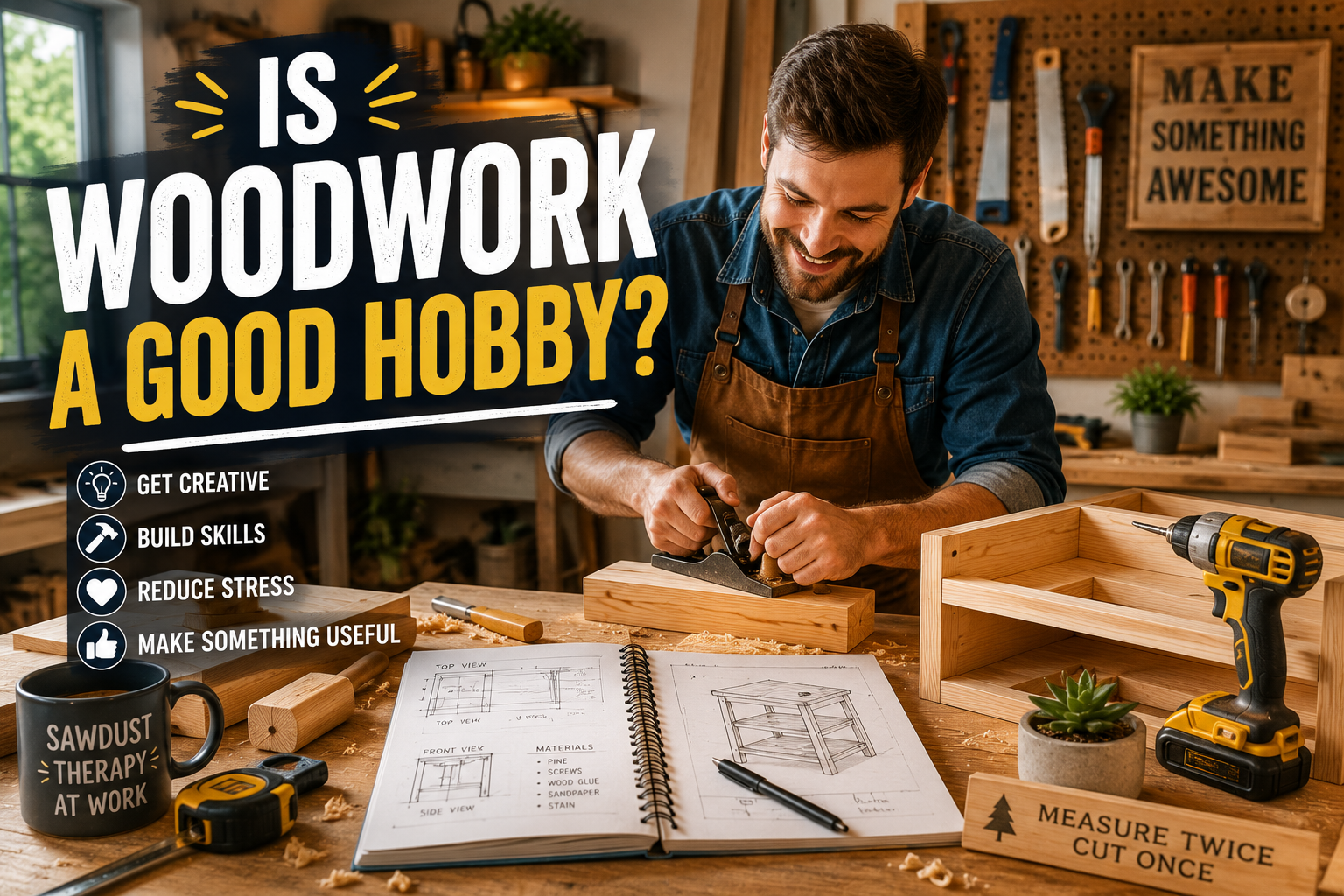
If you’ve ever admired a handcrafted table, built a simple shelf, or watched a woodworking video online, you’ve probably wondered: Is woodwork a good hobby?
The short answer is yes. Woodworking is one of the most rewarding hobbies you can take up, combining creativity, practical skills and the satisfaction of building something with your own hands. Whether you’re looking for a relaxing pastime, a way to improve your DIY skills, or even a hobby that could eventually earn extra income, woodworking has something to offer.
In this guide, we’ll explore what woodworking involves, why so many people enjoy it, and how you can get started.
What is Woodworking?
Woodworking is the craft of shaping, cutting and joining wood to create useful or decorative items. Projects can range from simple birdhouses and shelving units to custom furniture, outdoor structures and intricate carvings.
At its heart, woodworking is about transforming raw timber into something both beautiful and functional.
Common woodworking projects include:
- Coffee tables
- Bookshelves
- Garden planters
- Birdhouses
- Storage boxes
- Cabinets
- Wooden toys
- Picture frames
- Benches
- Garden furniture
As your confidence grows, you’ll find yourself tackling increasingly ambitious projects while developing valuable practical skills.
Why Woodworking is Such a Popular Hobby
You Create Something Real
Unlike many hobbies that exist entirely on a screen, woodworking gives you a tangible result. At the end of a project, you have something useful that you can display, use every day or give as a thoughtful gift.
Many woodworkers say there’s no better feeling than stepping back and admiring something they’ve built from scratch.
It Encourages Creativity
Woodworking allows you to express your creativity in countless ways.
You can:
- Design your own furniture
- Experiment with different wood species
- Choose finishes and colours
- Add decorative details
- Customise projects to fit your home
Even when following ready-made plans, there is always room to personalise your creations.
It’s a Great Way to Relax
Many people find woodworking surprisingly therapeutic.
Measuring, cutting, sanding and assembling require concentration, helping you switch off from everyday stresses and focus entirely on the task in front of you.
For this reason, woodworking is often described as a form of mindful craftsmanship.
You Learn Practical Skills
Every project teaches you something new.
Over time you’ll develop skills such as:
- Accurate measuring
- Safe tool handling
- Joinery techniques
- Sanding and finishing
- Project planning
- Problem-solving
- Material selection
These skills often transfer into other DIY and home improvement projects.
What Tools Do You Need?
One of the biggest misconceptions is that woodworking requires an expensive workshop full of professional machinery.
In reality, many beginners start with a relatively small collection of tools.
Essential beginner tools include:
- Tape measure
- Combination square
- Hammer
- Screwdrivers
- Cordless drill
- Handsaw or circular saw
- Clamps
- Sandpaper or an orbital sander
- Safety glasses
- Hearing protection
As your hobby grows, you may gradually add tools such as a mitre saw, router, table saw or planer.
There’s no need to buy everything at once.
Choosing the Right Wood
Different woods behave differently, making material selection an important part of woodworking.
Popular beginner-friendly woods include:
Pine
Affordable, widely available and easy to work with.
Cedar
Excellent for outdoor projects thanks to its natural resistance to moisture and insects.
Oak
Strong, durable and attractive, making it ideal for furniture.
Birch Plywood
Versatile and stable for cabinets, shelving and storage projects.
Learning which timber suits each project is part of the enjoyment of woodworking.
Woodworking Projects for Beginners
One of the best ways to learn is by completing small projects that build confidence.
Good beginner projects include:
- Floating shelves
- Birdhouses
- Wooden crates
- Simple stools
- Tool organisers
- Plant stands
- Coat racks
- Serving trays
- Storage boxes
These projects introduce essential techniques without becoming overwhelming.
Safety is Always Important
Woodworking is enjoyable, but it does involve sharp tools and power equipment.
Good safety habits should always come first.
Remember to:
- Wear eye protection
- Use hearing protection with power tools
- Keep your workspace tidy
- Measure carefully before cutting
- Read tool manuals
- Never rush a project
- Use dust extraction where possible
Working safely allows you to enjoy the hobby for years to come.
Can Woodworking Save You Money?
In some cases, yes.
Building your own furniture or storage solutions can often cost less than buying high-quality ready-made alternatives.
You also gain the ability to repair existing furniture instead of replacing it.
Of course, tools and materials represent an investment, but many woodworkers find the long-term value worthwhile—especially when they continue creating projects for years.
Can You Make Money from Woodworking?
For some people, a hobby eventually becomes a side business.
Popular items to sell include:
- Cutting boards
- Coffee tables
- Shelving
- Garden planters
- Wooden signs
- Children’s furniture
- Pet accessories
- Decorative home décor
Many hobbyists sell through local craft fairs, social media marketplaces or online platforms.
While most people begin woodworking purely for enjoyment, it’s nice to know the hobby has the potential to pay for itself over time.
How Do You Learn Woodworking?
Today’s beginners have more learning resources than ever before.
You can learn through:
- Online video tutorials
- Books and magazines
- Local woodworking clubs
- Community workshops
- Adult education classes
- Step-by-step woodworking plan libraries
Many people find that following detailed project plans helps them learn techniques while successfully completing real-world builds.
Is Woodworking Suitable for Everyone?
One of woodworking’s greatest strengths is that it’s accessible to almost anyone.
Whether you’re young or retired, working from a large workshop or a small garage, there are projects suited to your available space, budget and experience.
You can work at your own pace, gradually improving your skills as your confidence grows.
The hobby is equally enjoyable for people who love practical DIY tasks and those who simply enjoy making beautiful things with their hands.
The Benefits of Woodworking
People often stick with woodworking because it offers a unique combination of practical and personal rewards.
Some of the biggest benefits include:
- Encourages creativity
- Develops practical DIY skills
- Produces useful household items
- Can reduce stress
- Provides a sense of achievement
- Offers endless opportunities to learn
- Can become a profitable side hobby
- Suitable for all experience levels
Few hobbies combine creativity, craftsmanship and practical usefulness quite as well.
Final Thoughts: Is Woodwork a Good Hobby?
If you’re looking for a hobby that’s creative, productive and genuinely rewarding, woodworking is an excellent choice.
It offers the opportunity to build useful items, develop lifelong skills and enjoy the satisfaction of creating something from raw materials. Whether you’re assembling a simple birdhouse, crafting bespoke furniture or planning your first garden shed, every project helps you grow as a maker.
Perhaps the greatest appeal of woodworking is that there’s always something new to learn. Every completed project builds confidence, introduces fresh techniques and inspires the next idea. With patience, practice and the right guidance, woodworking can become a hobby you’ll enjoy for many years.
So, if you’ve been asking yourself, “Is woodwork a good hobby?” the answer is a resounding yes. It’s a hobby that challenges your mind, rewards your effort and leaves you with something you can be proud of every time you step into your workshop.
Leave a Reply
You must be logged in to post a comment.